This post contains affiliate links and I may be compensated for promoting WordCamp US 2026. If you make a purchase through these links, I may earn a commission at no extra cost to you.
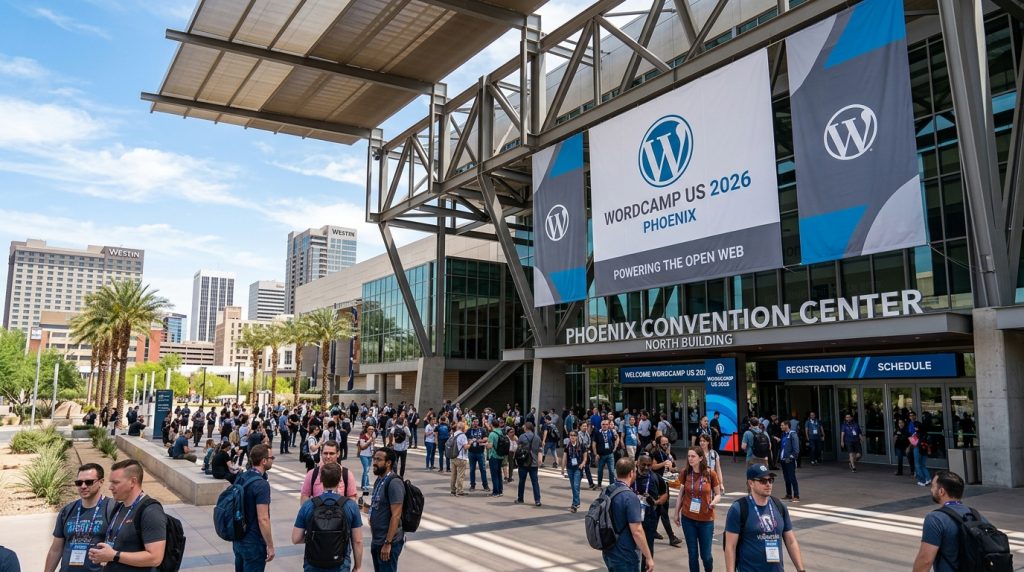
I haven’t attended WordCamp US in person yet — but after spending serious time researching past events, watching community recaps, and reading what actual attendees say about their experience, I can tell you this: it’s not what I expected, and probably not what you’re expecting either.
WordCamp US 2026 takes place August 16–19 at the Phoenix Convention Center in Phoenix, Arizona. It’s the flagship North American event for the WordPress community — four days of sessions, workshops, networking, and what attendees consistently describe as some of the most valuable conversations they’ve had in the WordPress space. Here’s what I found when I dug into what this event is actually like, and why I’m seriously considering going.
It’s Not Just for Developers
The first thing that surprised me in my research: WordCamp US is genuinely built for everyone in the WordPress ecosystem, not just engineers. Developers, designers, content creators, digital marketers, agency owners, bloggers, store builders — all of them show up, and all of them find their people there.
As someone who runs a content site focused on digital marketing and online business, that matters. I’m not a developer, and I was initially unsure whether an event with “WordPress” in the name was really for me. Everything I found says it is — and more importantly, that people like me tend to leave with connections and ideas they couldn’t have gotten anywhere else.
The Hallway Conversations Are the Real Event
One thing that comes up over and over in attendee recaps: the sessions are good, but the hallway conversations are where the real value happens. People describe meeting collaborators they’d only known online, having spontaneous conversations between talks that turned into partnerships, and connecting with people from different countries and marketing backgrounds in ways that don’t happen on social media or in online communities.
That’s the angle that interests me most personally. At an event like this, you’re surrounded by people who all share a common platform and ecosystem — WordPress — but come from completely different professional backgrounds. A freelance designer, a WooCommerce store owner, a content publisher, a plugin developer, and a digital marketing agency owner might all end up in the same hallway conversation. The potential for cross-industry partnerships and collaborations at something like this is genuinely unlike any other conference format I’ve seen.
The AI and Content Creation Sessions
This is what I’m most excited to see covered at WCUS 2026. AI tools for content creation have changed the way digital publishers and marketers work — tools that shorten production time, assist with video creation, voiceover, scripting, and content distribution are now central to how a lot of us operate. Seeing how the broader WordPress community is incorporating these tools, what’s working, what’s not, and where the ecosystem is heading is something I’d genuinely want to sit in on.
WordCamp US brings together the people actually building these integrations and workflows — not just talking about them theoretically, but presenting real implementations and use cases. For anyone working in content creation, digital marketing, or affiliate publishing, that’s directly applicable knowledge you can use immediately after the event.
Contributor Day: More Accessible Than You Think
Contributor Day is Sunday, August 16 — the first day of the event — and it’s specifically designed for people who want to give back to WordPress in some way. What surprised me is how many ways there are to contribute that have nothing to do with writing code.
Documentation, translations, community organizing, accessibility, marketing, support forums, photography for Openverse — all of these are legitimate contribution tracks, and experienced contributors are there specifically to help newcomers get oriented. Past summaries from Contributor Day mention teams welcoming first-time contributors and walking them through everything from scratch. If you’ve ever wanted to be part of how WordPress is actually built and maintained, this is the entry point.
The Value at This Price Is Hard to Argue With
A general admission ticket is $100, which covers four full days including meals, sessions, workshops, and a closing social. That’s genuinely one of the better value propositions in the tech conference space — most industry events at this scale cost several times more.
And if you use the discount code AF26 at checkout, you get $20 off, bringing it to $80. Get your tickets at us.wordcamp.org/2026/tickets/ — and use that code.
About Phoenix in August
Yes, Phoenix in August is hot. The organizers know this — and the Phoenix Convention Center is fully air-conditioned throughout. The brief for the event itself even jokes about it: come for the community, not the weather. The Sunday–Wednesday schedule also means your weekend before arrival is free if you want to explore the city at your own pace before the event kicks off.
Sponsors at WCUS 2026 include WordPress.com, WooCommerce, Jetpack, and Pressable — which means you’ll also have a chance to meet the people behind some of the most widely used tools in the WordPress ecosystem, not just other attendees.
Should You Go?
If you work in any part of the WordPress world — whether you’re a developer, a designer, a content creator, a marketer, or a business owner who builds on WordPress — yes. The combination of sessions, hallway conversations, Contributor Day, and the cross-industry networking opportunity is something that’s hard to replicate any other way.
I’m planning to be there. If you’re on the fence, the $80 ticket (with code AF26) is a low barrier for what four days in the middle of the WordPress community could open up for you. Get your ticket at us.wordcamp.org/2026/tickets/.
And if you’re already running your site on WordPress.com, you’ll find a lot of familiar faces at the Automattic booth — the team behind the platform will be there in person.
About the author: Carlos Valiente is a digital marketer and the publisher of Digital Audience, where he writes about websites, content tools, and online business platforms. He has hands-on experience running a self-hosted WordPress site and regularly covers tools and platforms for content creators and small business owners.